Metal guide · November 2026
Platinum or white gold: which is better for an engagement ring?
Both look white on the day you propose. The difference shows after a year of wearing: one stays white by nature, the other needs a fresh plating now and then.
Updated 12 November 2026. By Alexey Kovernikov, owner of Kove Jewelry in Prague.
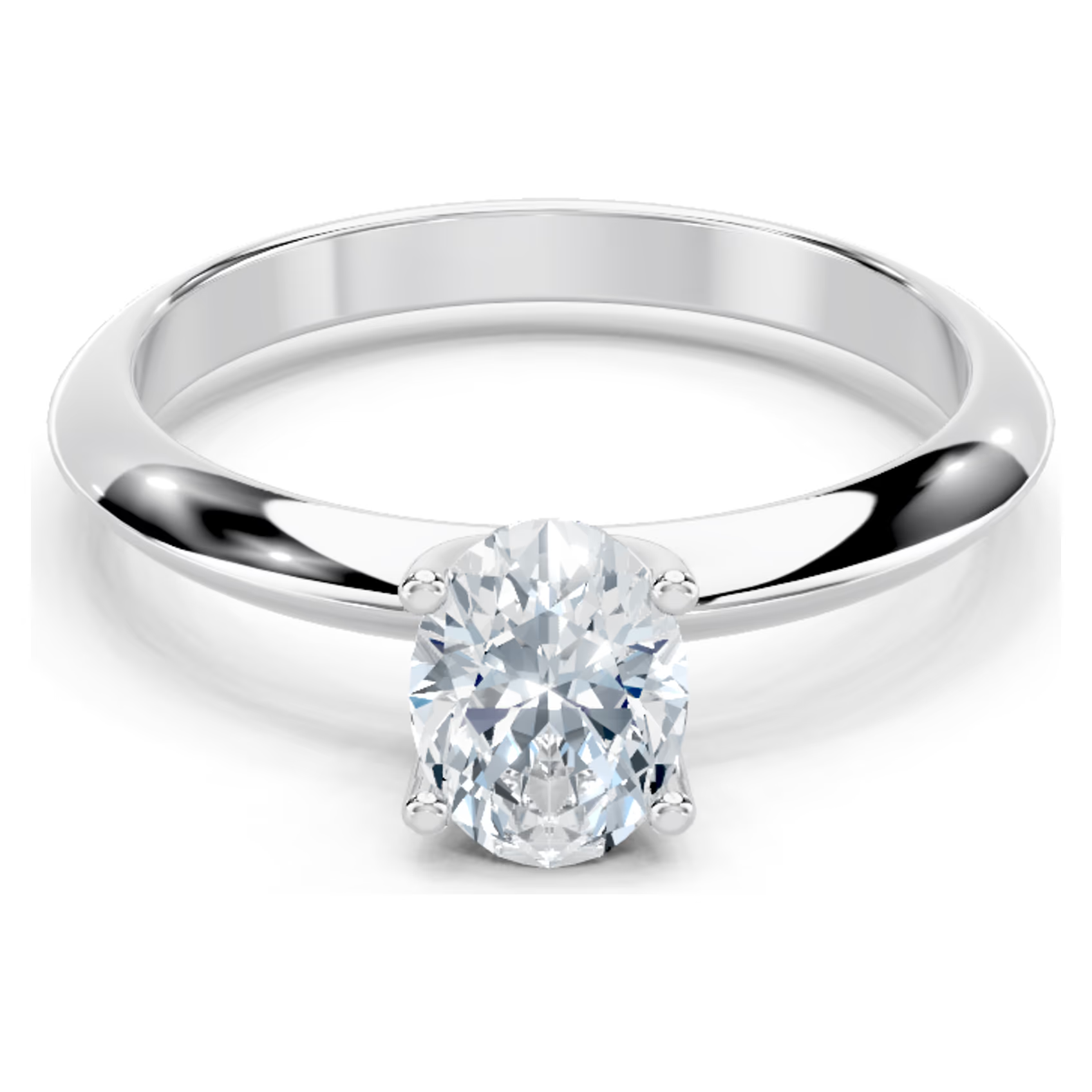
Platinum and white gold are the two main white metals for an engagement ring. In a shop window they look almost the same. They are not the same metal, and they age differently. Below is what really differs, with the source behind each point. Where a popular claim about platinum turned out to be wrong, we say so.
Platinum vs white gold at a glance
| What you compare | Platinum 950 | 18K white gold |
|---|---|---|
| What it is | 95 % platinum, 5 % other metals | 75 % gold, alloyed with palladium or nickel and other metals |
| Colour | Naturally white, slightly soft and grey | Usually rhodium-plated for a bright, cool white |
| Over the years | Stays white; the polish softens to a satin patina | Plating wears; a warmer tone can show through |
| Upkeep | Polish if you want the mirror shine back | Re-plating from time to time |
| Weight | About 20 g/cm³, roughly a third heavier | About 15 g/cm³ |
| Hardness (Vickers) | About 134-149 HV, softer | About 213-287 HV, harder |
| Wear in lab test | 2-3× less volume lost | More volume lost |
| Allergy | Usual alloys contain no nickel; reactions very rare | Nickel white gold must meet the EU nickel limit |
| Price at Kove (ring without centre stone) | Higher | Lower |
Densities, hardness and wear: a 2021 laboratory study in Johnson Matthey Technology Review, funded by the platinum industry association, so read it as one careful study, not the last word. Sources for every row are listed at the end.
Colour: the real difference
Gold is yellow. To make white gold, it is alloyed with white metals such as palladium or nickel, and most white gold rings are then plated with rhodium for a bright, cool white. GIA notes that the plating wears and the ring has to be re-plated occasionally. Brilliant Earth puts it at about six months to a year for a ring worn every day, longer if it is worn carefully.
Platinum is white by nature. There is no plating to wear through, so the colour you see on the first day is the colour of the metal itself, inside and out; it is a slightly softer, greyer white than fresh rhodium. Brilliant Earth also notes that platinum generally needs no rhodium plating.
Next to a colourless diamond both look icy and clean. The difference shows in year two, when a white gold ring may want its first re-plating and a platinum one does not.
What platinum 950 actually is
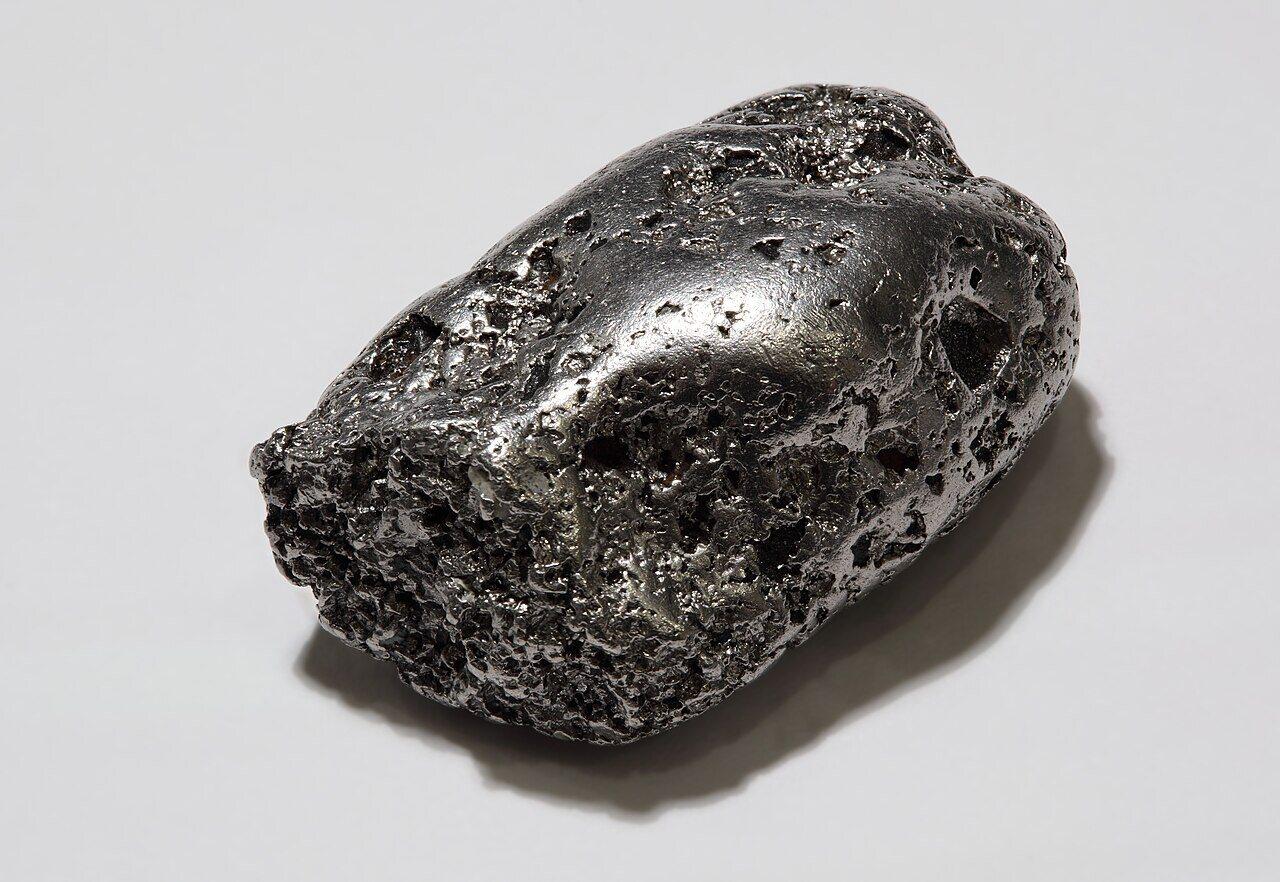
Pure platinum is too soft for a ring that is worn every day, so jewellery platinum is an alloy. The usual choice for engagement rings is 950: 950 parts in 1,000 are platinum, the rest is another metal for strength. Czech hallmarking law (zákon 539/1992 Sb.) recognises five platinum finenesses, from 999 to 800. At Kove the metal is called Platinum 950.
Platinum is also rarer. According to the U.S. Geological Survey, about 170 tonnes of platinum were mined worldwide in 2025, while gold reached about 3,300 tonnes: roughly nineteen times more.
Softer, yet it wears more slowly
This is the part most guides get wrong. Common cast platinum 950 is not harder than 18K white gold. In the 2021 study in Johnson Matthey Technology Review, two cast platinum 950 alloys measured about 134 and 149 on the Vickers scale; the 18K white golds measured 213 and 287.
And yet, in the same study, the platinum alloys wore away about three times less by volume than 18K palladium white gold, and about half as much as 18K nickel white gold and 14K palladium white gold. By weight the losses were closer, because platinum is denser; in plain terms, a platinum ring keeps its thickness and shape longer. When platinum was scratched, much of the metal was pushed to the sides of the scratch rather than shed, and the researchers think this ductility is why it wears more slowly. That is the soft, satin patina platinum owners talk about, and a polish brings the shine back.
Fair caveats: platinum does lose some metal; the study was paid for by the platinum industry association and is one of very few direct comparisons; and a softer metal can bend or dent where a harder one would chip. For prongs that is usually the lesser evil: a bent prong can be pushed back, a broken one has to be replaced. GIA also notes that platinum prongs are less likely to break. Whichever metal you choose, have the prongs checked once a year.
Designs you can order in platinum
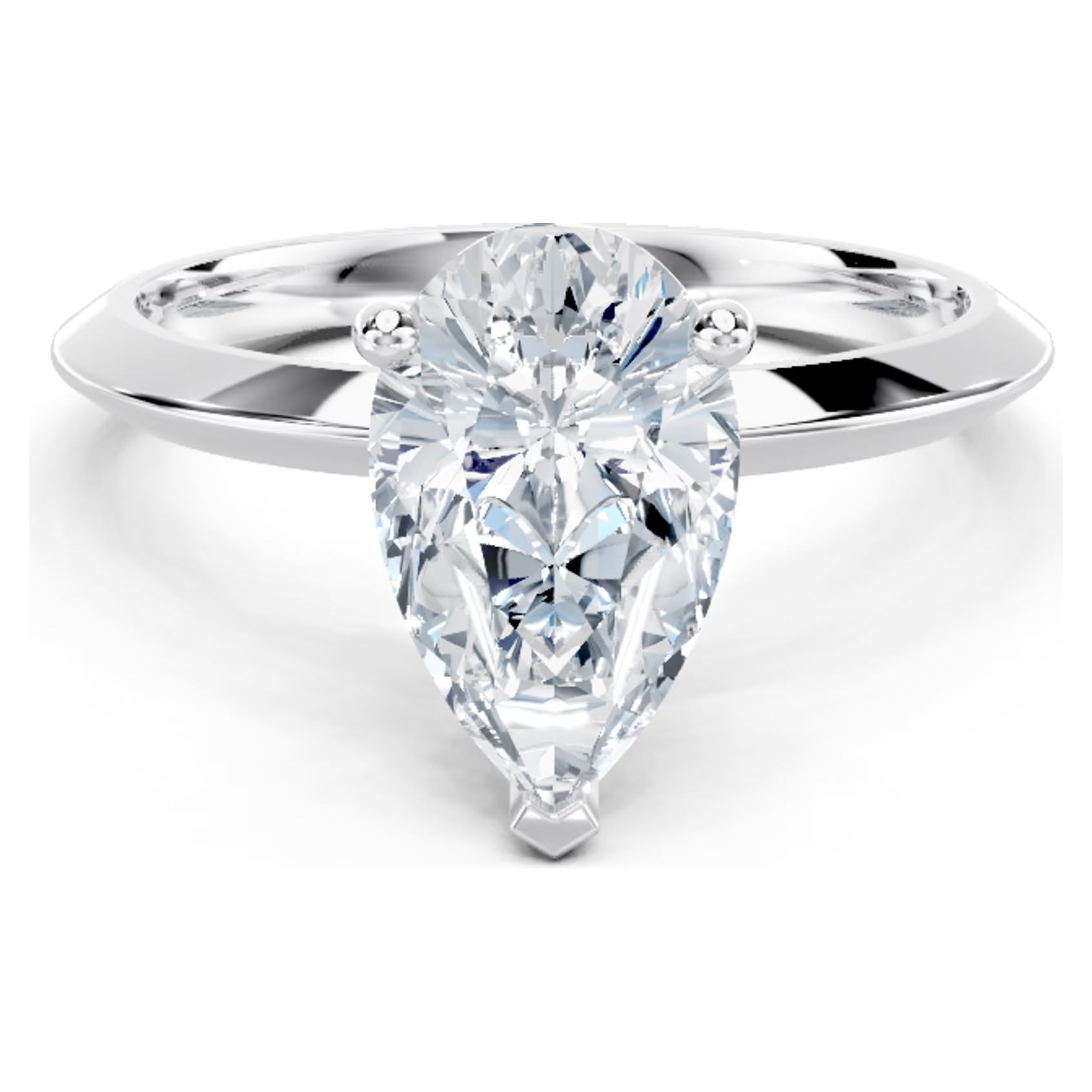
Épure Solitaire Pear
View the design
Trinity Solstice Trillion Three Stone Round
View the design
Lumière Pavé Solitaire Emerald
View the design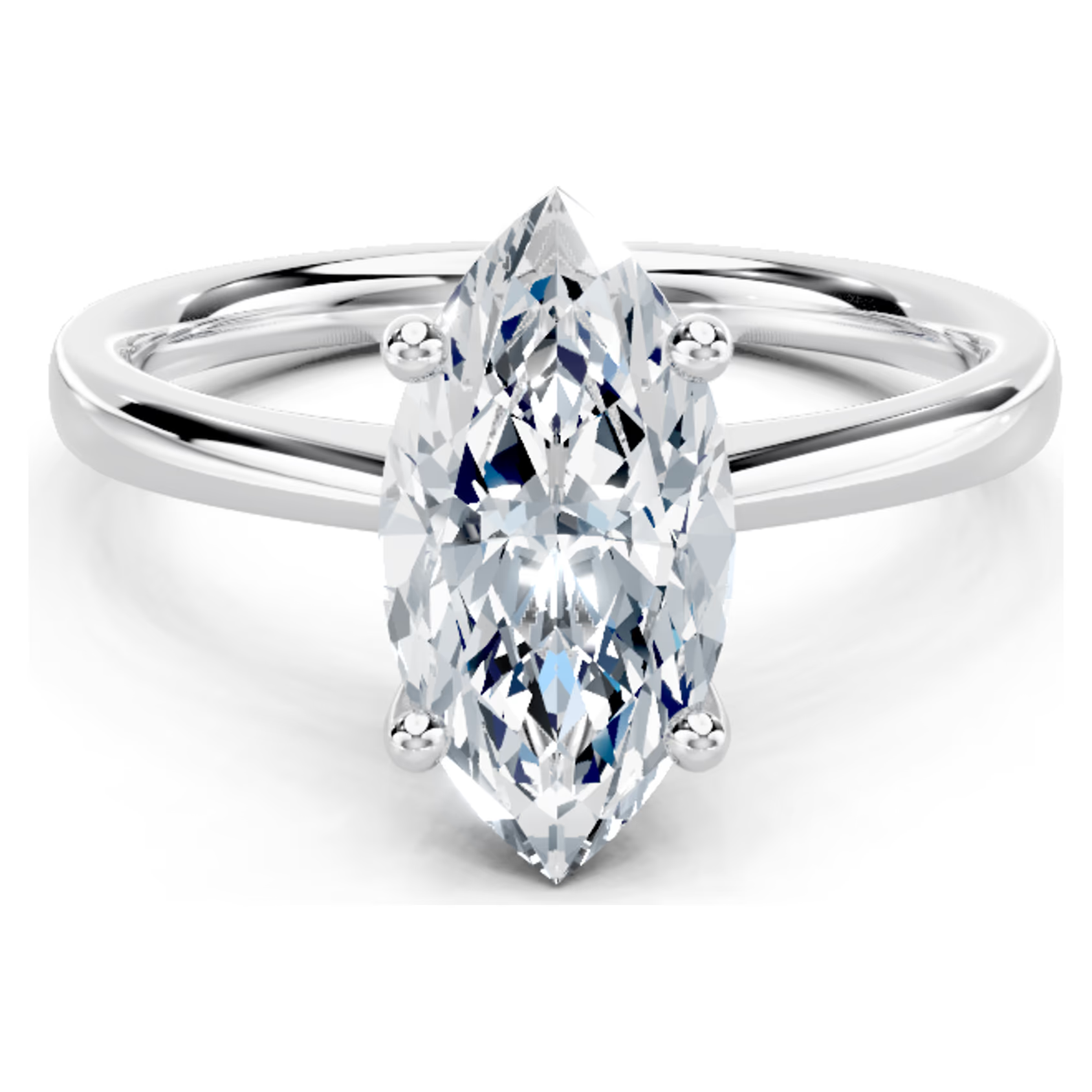
Lumière Solitaire Marquise
View the designShown in white gold. In platinum the design is the same; the white is slightly softer and greyer. Open a design and choose Platinum 950 to see its price.
Allergy: why it matters more than people think
Nickel is the most common contact allergen in Europe: in a five-country study 14.5 % of adults were sensitised to it. Some white gold alloys contain nickel. EU law (REACH, Annex XVII, entry 27) limits how much nickel a ring may release, so white gold sold in the EU must meet that limit, and white gold alloyed with palladium contains no nickel at all.
The usual platinum 950 jewellery alloys contain no nickel. Allergy to platinum itself is very rare: in one clinic study only two of 446 patch-tested patients reacted to it (Dermatitis, 2008). Some platinum alloys contain cobalt, so if she has a known metal allergy, ask us about the alloy before you order.
Which one to choose
- Choose platinum if low maintenance matters most: she wears the ring every day and you want it to stay white without re-plating; she has sensitive skin or a known nickel allergy; you like a heavier ring that feels solid on the hand.
- Choose 18K white gold if the budget matters more; she prefers a lighter ring; an occasional jeweller visit for re-plating does not bother you.
- Not sure what she wears? Look at her hands for a week. If she wears silver-tone jewellery, both are right. Our guide Yellow, white or rose gold? shows how to read it.
Rings that made platinum the classic
Around 1900 platinum replaced silver as the metal for diamond jewellery because, as GIA's Gems & Gemology puts it, silver tarnishes and platinum does not. Two famous engagement rings kept it there.
In 1947 Princess Elizabeth received a round brilliant diamond of about three carats set in platinum, according to Pragnell, which now owns Philip Antrobus, the jeweller that made it. In 1956 Grace Kelly received her Cartier ring: an emerald-cut diamond of 10.47 carats with two baguettes, in platinum. We wrote about her ring and the closest Kove design in Grace Kelly: three stones, emerald cut.
Platinum at Kove
- Metal: Platinum 950, offered on our rings, earrings and pendants next to 14K and 18K gold.
- Lead time: made to order in up to 21 business days, the same as gold, often sooner.
- Price: at Kove the ring without its centre stone costs more in platinum than in 18K gold; the centre diamond costs the same. The product page shows the exact price as soon as you choose platinum.
- How to order: open the ring you like, choose Platinum 950 and order as usual. Questions about the alloy or the size? Write to us.
Questions people ask
Is platinum better than white gold for an engagement ring?
For a ring worn every day, platinum has two real advantages: it is white by nature, so it does not need rhodium re-plating, and in a 2021 lab study it wore away two to three times less by volume than 14K and 18K white gold. White gold is lighter and harder, and at Kove it costs less. Neither is wrong; platinum is the lower-maintenance choice.
Is platinum harder than gold?
Not the common cast alloys. Platinum 950 measured about 134-149 on the Vickers hardness scale, 18K white gold about 213-287. Platinum is softer but more ductile: when it is scratched, much of the metal is pushed aside rather than shed, which researchers think is why it wears more slowly.
Does platinum scratch?
Yes, every precious metal does. On platinum the fine scratches form a soft satin patina. Many people like it; if you prefer a mirror shine, a jeweller polishes the ring. No plating is involved.
How much heavier is a platinum ring?
Platinum alloys weigh about 20 g per cubic centimetre, 18K gold about 15 and 14K gold 13-14. The same ring in platinum is roughly a third heavier than in 18K gold and about half again as heavy as in 14K.
Is platinum hypoallergenic?
The usual platinum 950 jewellery alloys contain no nickel, the most common contact allergen in Europe, and allergic reactions to platinum itself are very rare. Some platinum alloys contain cobalt, so if she has a known metal allergy, ask about the alloy before you order.
Does white gold turn yellow?
White gold does not change colour inside, but most white gold rings are rhodium-plated and the plating wears. Where it wears, the warmer tone of the gold alloy can show. A jeweller re-plates it; how often depends on the alloy and how the ring is worn.
Can I order a Kove ring in platinum?
Yes. On the product page choose Platinum 950 next to 14K and 18K gold; the price updates on the page, and the ring is made to order in up to 21 business days, the same as gold.
Next step
Sources
- Fryé, Klotz, Heiss: Wear Resistance of Platinum and Gold Alloys: A Comparative Study. Johnson Matthey Technology Review 65(3), 2021 (funded by Platinum Guild International)
- GIA: Choosing Between White Gold, Platinum, Palladium, and Silver
- Brilliant Earth: What Is Rhodium Plating?
- U.S. Geological Survey: Mineral Commodity Summaries 2026, Platinum-Group Metals
- U.S. Geological Survey: Mineral Commodity Summaries 2026, Gold
- Schuttelaar et al.: Prevalence of contact allergy to metals in the European general population with a focus on nickel and piercings: The EDEN Fragrance Study. Contact Dermatitis, 2018
- Fowler, Perryman, Quinlan: Positive patch-test reactions to platinum are rare. Dermatitis, 2008
- Commission Regulation (EC) No 552/2009, REACH Annex XVII entry 27 (nickel)
- Zákon č. 539/1992 Sb., o puncovnictví a zkoušení drahých kovů (puncovní zákon), § 5
- Misiorowski, Hays: Jewels of the Edwardians. GIA Gems & Gemology, Fall 1993
- Pragnell (owner of Philip Antrobus): royal connections
- Photo: platinum nugget, Alchemist-hp (www.pse-mendelejew.de), Free Art License, Wikimedia Commons
Still not sure? Just ask a real person.
Tell us your idea and your budget: we answer personally and spec the best certified diamond for you, with its IGI or GIA certificate. No pressure, no obligation, no checkout.